Written By: Apoorv Agarwal, Deepika Sethia, Priyanshu Raj, Suvangana Agarwal
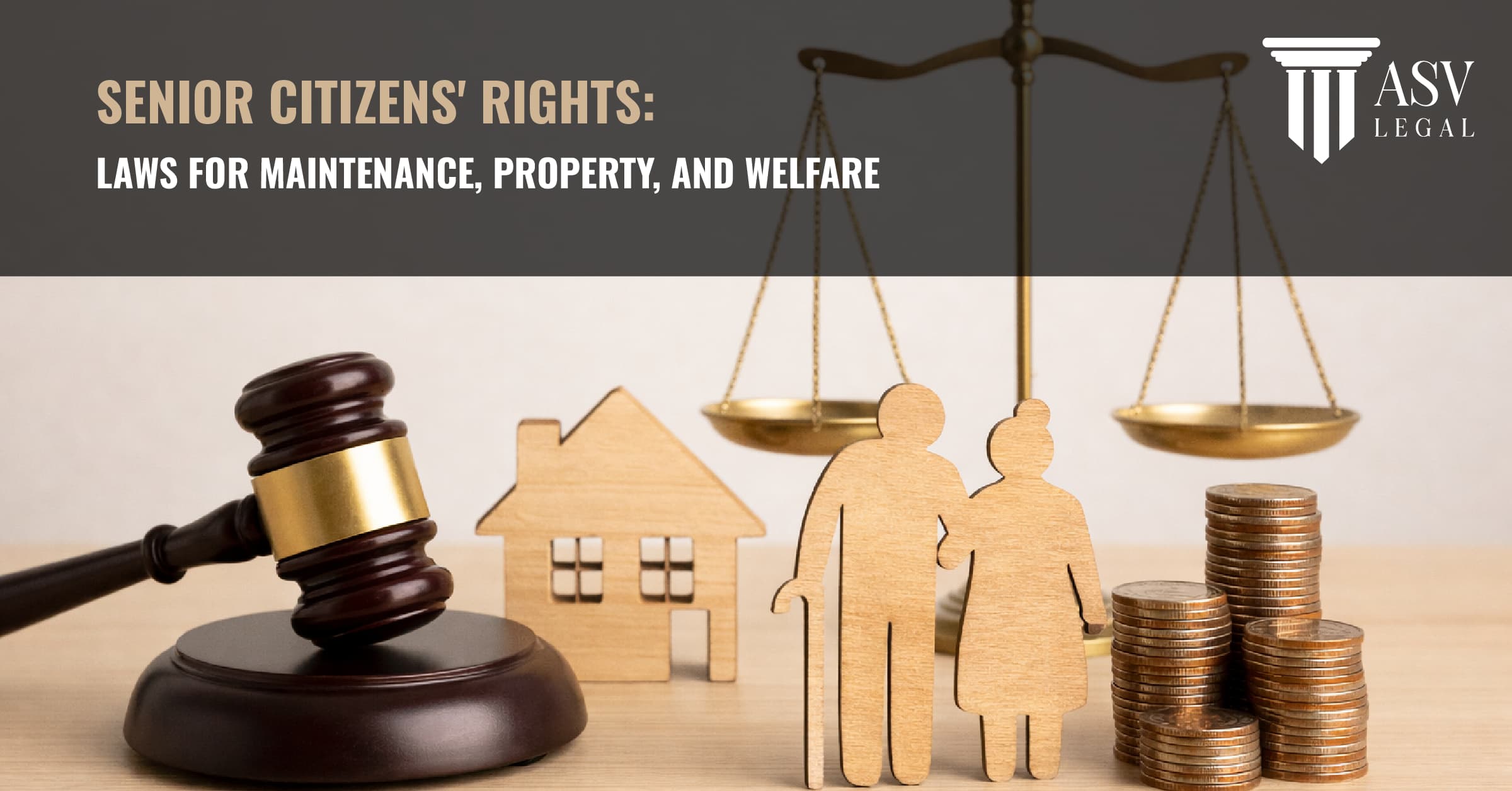
[1]Growing old should never mean losing one’s dignity, independence, or sense of security. Senior citizens spend their entire lives supporting their families, building communities, and contributing to the nation. When they enter the later phase of life, it becomes our responsibility to ensure that they are protected and respected. Thankfully, Indian law recognises this need and provides strong safeguards for elders especially regarding maintenance, property rights, and overall welfare. Knowing these rights empowers senior citizens to speak up and prevents misuse or exploitation during vulnerable years.
Maintenance
Under the Maintenance and Welfare of Parents and Senior Citizens Act, 2007, children and legal heirs have a legal duty to maintain their elderly parents. If an elder is unable to meet necessities like food, medical care, or shelter, they can approach the Maintenance Tribunal for quick relief. Courts have repeatedly supported this right. In S. Vanitha v. Deputy Commissioner (2020), the Supreme Court emphasised that the Act’s purpose is to ensure parents live with dignity, and their claims must be prioritised. Similarly, in Dr. Ashwani Kumar v. Union of India (2018), the Court reminded the government to effectively implement the Act so that no senior citizen is left helpless or ignored. These judgments make it clear that maintenance is not charity it is a legal and moral obligation.
Property
A common problem many senior citizens face is emotional pressure or manipulation to transfer their property to children or relatives. The law protects elders from such exploitation. If a senior citizen gifts or transfers property on the promise of care, but the recipient later neglects them, the transfer can be cancelled. The Delhi High Court in Sunny Paul &Anr. v. State NCT of Delhi (2017) strongly upheld this principle, stating that children cannot demand property as a right and elders can reclaim gifted assets if they are mistreated. The law also recognises that senior citizens have complete freedom to manage their property whether selling, gifting, or making a Will. No one can force them or threaten them into signing documents. These safeguards ensure elders stay in control of their assets and decisions.
Welfare
Beyond maintenance and property, the law also focuses on the broader welfare of elders. Welfare means ensuring a life of comfort, dignity, and security. The government is expected to create old-age homes, senior citizen helps desks in police stations, and special healthcare facilities for elders. In Ashwani Kumar v. Union of India (2018), the Supreme Court directed the government to frame national plans for senior citizens, strengthen healthcare, and provide accessible services. Many states now offer pensions, medical subsidies, and priority counters in hospitals for elders. These welfare measures remind us that ageing should not be a struggle but a peaceful stage of life.
DEMARCATION
- Right to Maintenance
Every elderly parent has a clear legal right to be maintained by their children or legal heirs. This includes all basic needs food, shelter, medicines, medical treatment, anda safe living environment.If elders are being neglected, they can approach the Maintenance Tribunal, “The Tribunal specifically prioritises cases filed by senior citizens. The process is not complicated, and relief is generally granted without undue delay
- Right to Property
Elders have complete freedom over their property. They can sell, gift, rent, or will their property according to their own decision, without pressure from anyone.
Many times, senior citizens sign documents under emotional pressure, but the law firmly protects them. If someone has obtained property on the promise of providing lifelong care but later neglects the elder, the senior citizen has the right to have the property transfer cancelled.In simple terms, this means that elders always retain control over their propertyeven if they have already transferred it to someone.
- Right to Welfare
Apart from maintenance and property, senior citizens also have a right to general welfare, which includes government support to ensure a comfortable life.This includes measures such as old-age homes, healthcare facilities, police support cells, pension schemes, and priority services in hospitals.Senior citizens are the absolute owners of their property. They may sell it, lease it, gift it, or bequeath it through a Willentirely at their own discretion.No one can force them, pressure them, or emotionally manipulate them into signing and document.If they have transferred property to someone on the promise of being cared for, and that promise is later broken, such a transfer can be cancelled.
HOW TO USE THESE RIGHTS WHEN THINGS GO WRONG!
- Maintenance
Children Stop Taking CareIf children stop providing support or ignore the basic needs of their parents, the elder can go to the Maintenance Tribunal at the DM/SDM office.The process is straightforward no lawyer is required; no complicated paperworkand the Tribunal usually give relief within 90days. It is designed to help elders quickly and without stress.
- Property
If a senior citizen is being pressured to sign documents or someone is trying to take advantage of them, they can approach the SDM or the Maintenance Tribunal and request cancellation of a gift deed or transfer that happened because of pressure, false promises, or emotional manipulation. They can also file a complaint at the Senior Citizen Help Desk in their local police station.If any signatures were taken through force or emotional pressure, the law allows such documents to be declared void, meaning they no longer have any legal effect.
- For welfare services
- Apply for old-age pension, healthcare schemes, etc., through the social welfare department or online state portals, Elders can demand facilities in hospitals priority counters, separate lines.
Real-life scenarios
Property PressureChildren emotionally forcing parents to transfer house, land and etc.After signing, behaviour changes and neglect begin.Financial NeglectKids stop sending money or refuse to pay medical bills.Abuse or Threat Sometimes elders face emotional abuse, abandonment, or physical intimidation, Isolation After Property TransferChildren take over property and then push elders out of their own house. These situations are exactly why the law gives elders strong remedies so they can act fast without fear.
Conclusion
Ultimately, senior citizens’ rights are not just legal rules they are moral responsibilities. Laws can enforce protection, but true respect comes from empathy. The older generation has given us guidance, support, and years of hard work; the least society can do is ensure they live their final years with dignity. Sharing knowledge of these rights is one of the strongest ways to honour their lifetime of contribution.
[1]Associate at ASV Legal LLP