

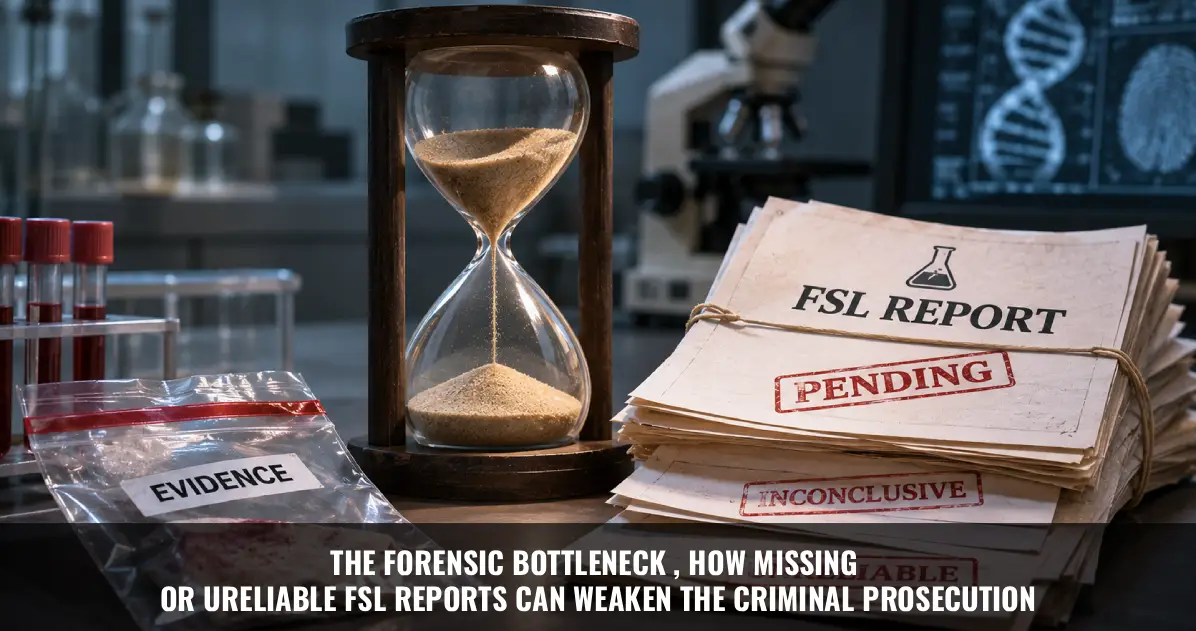
Why the chain of custody matters
A criminal case may depend on a sample of drugs, a weapon, blood, DNA or another material collected during an investigation. The Forensic Science Laboratory (FSL) examines that material and gives its scientific opinion. But before a court can rely on the result, the prosecution must also show that the material examined by the laboratory is the same material that was seized during the investigation. It must explain where the sample was kept, who handled it and how it reached the laboratory. This record is known as the “chain of custody”.
The point is simple, a scientific report may be accurate about the sample received by the laboratory, but it cannot by itself establish that the sample was properly collected, stored and protected before it arrived. If important stages are unexplained, the court may have reason to doubt whether the report can safely be relied upon.
The issue is not merely technical. On 16 September 2026, the Supreme Court acquitted two men in a charas case after finding, among other defects, that the prosecution had not explained a five-day gap between dispatch of the samples and their receipt by the FSL. The Court has also examined similar problems in cases involving sexual assault and murder.
When is an FSL report at risk?
Problems generally arise in three ways. First, a sample may be sent to the laboratory after an unexplained delay. Secondly, a report may exist but may not have been properly brought on the court record. Thirdly, the report may be on record, but the prosecution may be unable to prove the safe custody and movement of the sample. The third issue is especially important, the laboratory can describe the seals and material it received, but it cannot fill gaps in the earlier custody record.
The relevant records may include the seizure memo, details of the seal and identifying marks, the malkhana register, the forwarding letter, the laboratory receipt and evidence from the person who carried the sample. These documents and witnesses help to establish the each link in the chain.
What the law provides
Section 176(3), BNSS: For offences punishable with imprisonment of seven years or more, the provision requires a forensic expert to visit the crime scene and requires the process of collecting forensic evidence to be videographed. Its implementation depends on the relevant State notification, within the period provided by the provision.
Section 329, BNSS: Reports of specified government scientific experts may be used as evidence without examining the expert in every case. The court may, however, summon the expert if it considers that necessary.
Section 39, Bharatiya Sakshya Adhiniyam, 2023: Expert opinion is relevant, but it is not conclusive. The court must assess it along with the reasons supporting the opinion and the other evidence on record.
Section 52-A, NDPS Act: This provision deals with the inventory, sampling and certification of seized narcotic drugs and psychotropic substances. Compliance, and the explanation for any lapse, may be important when the court considers whether the sample was properly preserved.
What the Supreme Court decisions show
In State of Rajasthan v. Tara Singh (2011) 11 SCC 559, the Court upheld an acquittal where the prosecution could not account for the custody of the seized samples before they reached the laboratory. In Prakash Nishad @ Kewat Zinak Nishad v. State of Maharashtra (2023 LiveLaw (SC) 461), the Court set aside a death sentence after finding serious gaps in the collection, handling and dispatch of biological samples. It also observed that DNA evidence, though valuable, is not infallible and must be assessed with the rest of the evidence.
In Allarakha Habib Memon v. State of Gujarat , the Court found that the prosecution had not established the safe custody of seized articles between the police station and the FSL. It also cautioned that a matching blood group on a weapon, by itself, does not establish that the accused committed the offence. In Putai v. State of Uttar Pradesh , the Court declined to rely on DNA reports when the prosecution had not properly proved the collection, custody and dispatch of the samples.
Most recently, in Abdul Rajik v. State of M.P., 2026 INSC 1001 , the Supreme Court found that the five-day gap in the movement of the samples was unexplained. The record also contained defects relating to sealing, malkhana entries, the carrier of the samples and the procedure under Section 52-A of the NDPS Act. The Court held that the chain of custody had not been established and that the FSL report could not sustain the convictions.
Delay does not automatically mean acquittal
The law does not treat every delay as fatal. In Hardip Singh v. State of Punjab (2008) 8 SCC 557, a delay of 40 days in sending samples was not considered fatal because the evidence showed that the material remained in safe custody and the seals were intact. The important question is whether the prosecution can explain the delay and prove that the sample remained safe and identifiable throughout.
Practical steps to prevent avoidable gaps
Investigators should seal and mark each sample carefully, record the identifying details in the seizure and forwarding documents, make timely entries whenever custody changes and send samples to the laboratory without unnecessary delay. If a delay occurs, its reason should be recorded. In NDPS cases, the statutory procedure under Section 52-A should be followed.
Prosecutors should identify the witnesses who can prove each stage of custody, including the officer who seized or sealed the material, the malkhana in-charge and the person who delivered it to the laboratory. They should also ensure that the FSL report is properly placed on the record and that the expert is called when the court requires it. Laboratories and governments must work towards adequate staffing, timely examination and clear recording of seals and identifying marks.
Conclusion
An FSL report can be an important part of a criminal case, but it is not a substitute for a proper investigation. The report explains what the laboratory found in the material it received. The chain of custody helps the court decide whether that material is the same material that was seized. Both are necessary for the evidence to be assessed fairly. Careful documentation, timely dispatch, reliable witnesses and adequately staffed laboratories can prevent avoidable doubts and help courts reach decisions on dependable evidence.